Your guide to Tasmania
Top destinations in Tasmania

Launceston
Perched on the Tamar River and surrounded by vineyards, lavender fields and a dramatic gorge, Launceston is your perfect introduction to northern Tasmania.

Hobart
Tasmania’s cool capital is a haven for creatives, outdoorsy types and foodies alike. From world-renowned galleries to epic natural scenery, Hobart dazzles at every turn.

Devonport
Whether you’re sipping local cider, exploring a 19th-century lighthouse or looking for penguins at the beach, this charming coastal city deserves a stop on your Tasmanian tour.
Tasmania: fast facts
| Language | English |
|---|---|
| Currency | Australian dollar (A$) |
| Time zone | Hobart - UTC+10 (AEST) and UTC+11 (AEDT) |
| High season | December – February |
| Low season | June – August |
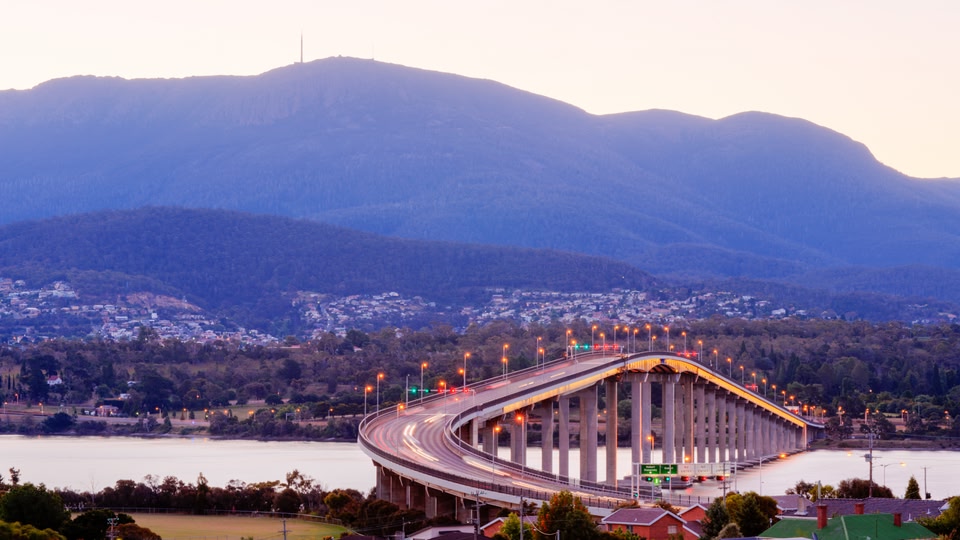
Tasmania highlights
Hit the wine trails
Tasmania’s cool climate and rich soils create some of Australia’s best wines. Tour one of its wine trails for a taste of the local scene. In the Tamar Valley, sip sparkling wines at boutique vineyards surrounded by dramatic gorges and rolling hills. On the east coast, you’ll find family-run wineries known for cool-climate varieties like pinot noir and chardonnay.
Go stargazing
One of the top things to do in Tasmania is stargazing. With minimal light pollution, areas like Cradle Mountain, Lake St. Clair and Bruny Island are dark sky hotspots. Tasmania is also one of the best places to see the Southern Lights, especially in winter. And in coastal areas, you can sometimes spot tiny sea creatures glowing in the dark (known as ‘bioluminescence’).
Take an epic hike
Tasmania’s untamed landscapes are perfect for moving your legs. The Overland Track is a 65-kilometre journey through moorlands and ancient forests, passing Australia’s deepest lake and the iconic Cradle Mountain. You can climb this peak on a day hike. For a coastal trail with cool rock formations, try the 48-kilometre Three Capes Track. Get your parks pass early for multi-day hikes, as spots fill up fast.
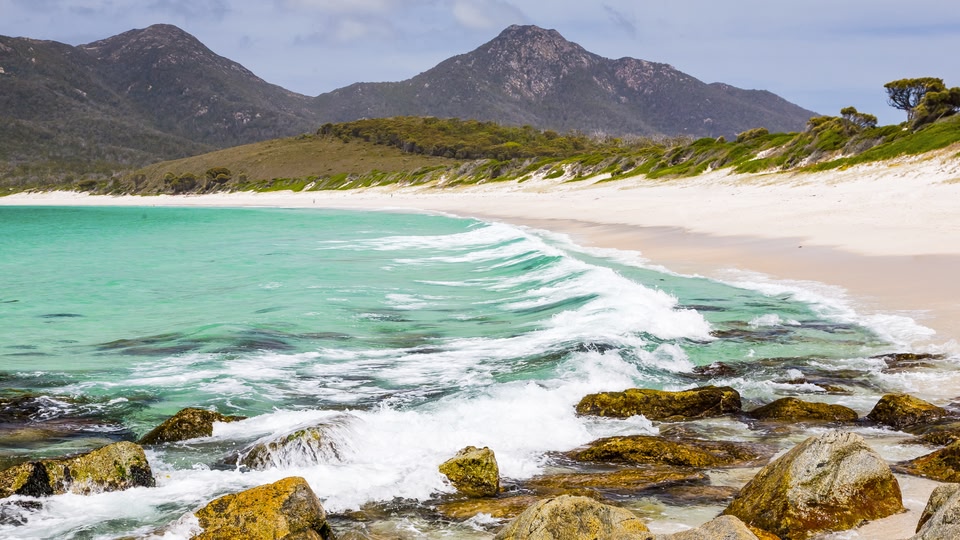
Things to do in Tasmania
Top attractions
First-time visitors can’t miss Cradle Mountain. Try Dove Lake Circuit for a gentle, scenic trail or the summit trek for more of a challenge. Head to Freycinet National Park to snap the perfect pic from Wineglass Bay’s lookout. And spend a good few hours exploring Hobart’s Museum of Old and New Art (MONA) — a gallery, architectural landmark and foodie hotspot all in one.
Beaches
Named for its perfectly curved shape, Wineglass Bay is one of the most famous beaches in Tasmania. You can reach it via a 6-kilometre round-trip hike with stunning views. The Bay of Fires is known for its white-sand shorelines framed by orange lichen-covered rocks. A short ferry ride from Hobart, Bruny Island offers paradise beaches like The Neck and Adventure Bay.
Nature
Tasmania’s west coast is pure, untamed wilderness, with glacier-carved landscapes, hulking mountains and 1,000-year-old trees. Find Australia’s tallest trees at Tahune Airwalk in the south, while the east coast’s Tasman National Park packs in arches, pillars and other rocky wonders. And Maria Island is one of the best places to spot Tasmanian devils, wallabies and wombats.
Cuisine
The best restaurants in Tasmania show off the island’s homegrown food scene, from Tamar Valley lamb and fresh oysters to black truffles and artisan cheese. Stroll around Hobart’s Salamanca Markets to sample fresh produce. Or explore the city’s mix of seafood bars, cosy Italian joints and farm-to-table kitchens. Try the local cider to find out why Tasmania is called the ‘Apple Isle’.
Culture and museums
The jewel in the island state’s cultural crown is the Museum of Old and New Art (MONA). This eclectic museum in Tasmania’s capital has everything from Egyptian mummies to contemporary sculpture. Cider fans won’t want to miss Willie Smith’s Apple Museum in the beautiful Huon Valley. Stop by the Maritime Museum in Hobart to discover the island's seafaring past.
Nightlife
A Hobart bar crawl could take you from historic pubs to whiskey lounges and late-night izakaya joints in the space of one evening. For performing arts, check out the Peacock Theatre, a 19th-century warehouse turned cultural hub. Nightlife in Tasmania’s second city, Launceston, is more low-key, but there’s a smattering of great cocktail bars worth exploring.
Find the best time to visit Tasmania
Weather in Tasmania through the year
March – May: Autumn is the best time to visit Tasmania if you’re a foodie, with the wine harvest and festivals celebrating island produce. Pack layers and an umbrella — the weather can change at a moment’s notice.
June – August: Winter is the season for alpine hikes, cold-water swims and some of the world’s best stargazing. Temperatures rarely get over 10°C, so wrap up warm.
September – November: Spring is prime time for hiking and road tripping, with blooming wildflowers and thinner crowds than in summer. Expect chilly mornings and evenings, plus a few showers.
December – February: With clear skies, temps in the mid-20s°C and plenty of world-class beaches to soak it all up on, summers are a delight. Book ahead if you’re visiting over Christmas.
Events in Tasmania
Festivale (January to February): Launceston shows off its foodie credentials at this three-day festival full of cooking demos, live music and food stalls.
Party in the Paddock (February): The island’s largest music festival brings a mix of Australian and international artists to northern Tasmania. Comedy shows and yoga and meditation workshops add to the fun.
Dark Mofo (June): This Hobart festival has gained a cult following thanks to events like a solstice swim and a popular winter feast. But don’t miss the smaller gigs and art installations that pop up around the city.
Taste of Summer (December to January): Take a bite out of Tasmania’s world-renowned food scene at this week-long festival on Hobart’s waterfront. Highlights include fresh oysters, local cider and cheese.
Know before you go
Budget
With a little planning, it’s possible to visit Tasmania on a budget. An inexpensive meal in a restaurant will cost you less than 30 Australian dollars ($), while a coffee is around $5. A short taxi ride costs roughly $15.
Health and safety
Getting outdoors here is essential, but you need to be careful. The UV can be high in summer, so cover up and apply high-SPF sun cream before heading outside. If you plan on bushwalking, stick to marked trails and bring more food and water than you need. Check bushfire alerts before visiting national parks. If you get into trouble, dial 000 for emergency services.
Free things to do
Walking is the cheapest way to explore Tasmania. Launceston’s Cataract Gorge offers plenty of short yet scenic trails. Hobart’s Kunanyi/Mount Wellington has a few popular hikes, like the 7-kilometre Organ Pipes trail, which gets you up close to towering rock pillars. In Hobart on a Saturday? Join locals for the weekly ritual of strolling around Salamanca Market, packed with local art, crafts, food and more.
Family friendly
Make friends with Tassie creatures at Bonorong Wildlife Sanctuary, where you can learn about wombats and Tasmanian devils in their natural habitat. Or hop on a wildlife cruise around Bruny Island and look for dolphins, seabirds, seals and whales around the rugged coastline. Train buffs big and small shouldn’t miss the Tasmanian Transport Museum just north of Hobart.
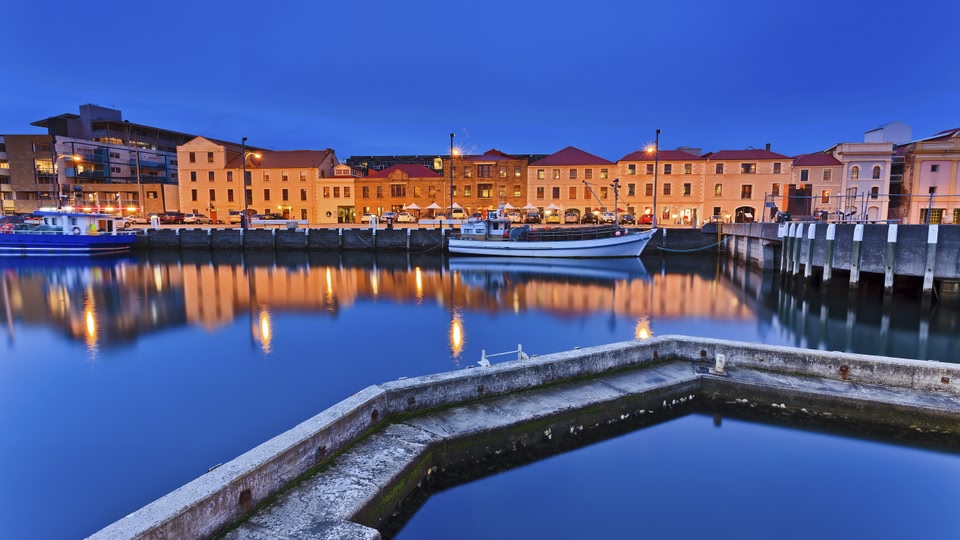
Getting around Tasmania
Public transport
Buses: Tassielink Transit runs intercity buses between more than 50 destinations. You’ll find metro buses in Hobart, Launceston and Burnie, and there’s a shuttle service between Launceston and Cradle Mountain.
Trains: There are a few heritage rail routes kept alive by rail enthusiasts. Check out the West Coast Wilderness Railway, a 35-kilometre journey through misty mountains, ancient rainforests and ghost towns.
Boats: Smaller islands like Bruny and Maria are accessible by ferry, while the Ida Clair Ferry operates across Lake St Clair near Cradle Mountain. If you’re heading to the mainland, hop aboard the Spirit of Tasmania, a scenic route between Devonport and Geelong, Victoria.
Domestic flights
Tasmania has four domestic airports, in Hobart, Launceston, Devonport and Burnie. Given the island’s compact size, there’s no need to fly within the region — the drive time between Hobart and Launceston is just two and a half hours.
Driving and car hire
Tassie’s diverse landscapes were made for scenic drives. Roads are well maintained but can be narrow, so drive carefully. Remember to drive on the left and stick to the speed limit — typically 100 kilometres per hour on rural roads, and 50 kilometres per hour in towns and cities.


