Your guide to Seville
Seville highlights
Architectural splendour
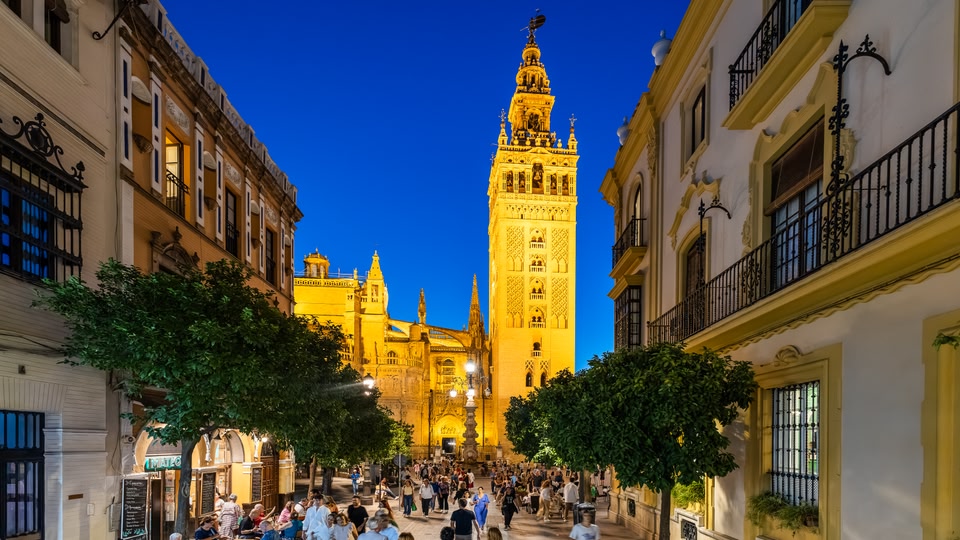
Visit the world's biggest gothic cathedral, Renaissance architecture and regal palaces. The Alcazar of Seville, a UNESCO World Heritage site, has exquisite Moorish design and lush gardens. Adjacent to the Alcazar is the towering Giralda bell tower. Ascend its spiralling ramps for panoramic views of the city.
Flamenco rhythms
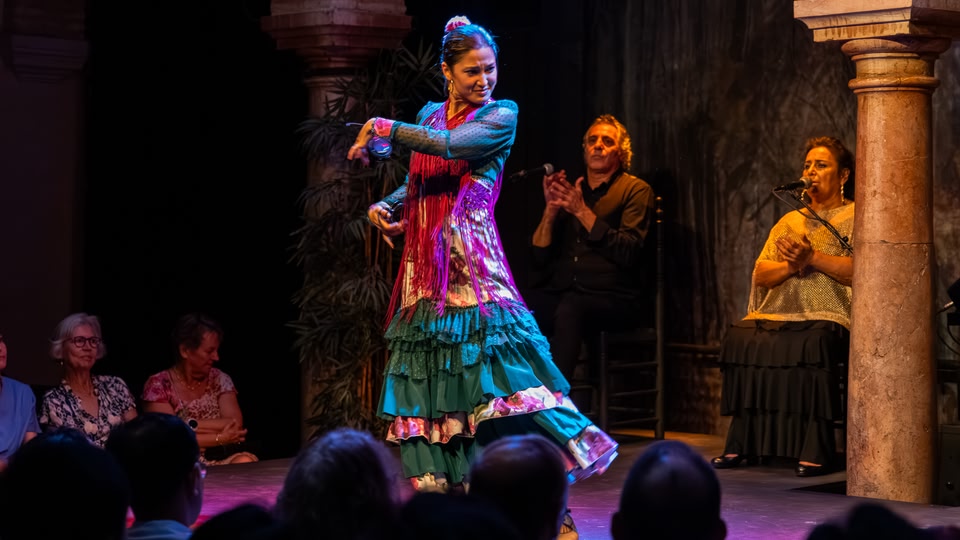
For music lovers, Seville offers plenty of clubs where you can move to the soul-stirring rhythms of flamenco. Wander through the narrow streets of the historic Triana neighbourhood, where flamenco's roots run deep. Intimate ‘tablaos’ (flamenco venues) feature passionate performances where dancers, guitarists and singers converge to express raw emotion through music and movement.
Lush gardens
A city break in Seville offers plenty of opportunities to explore landscaped gardens and arboretums. If you’re craving respite from the bustle, you can wander through lush greenery and fragrant blooms along shaded paths. Visit Parque de Maria Luisa for ornate architecture and towering palms. To learn about Andalusian plant life, check out biodiversity sanctuary Arboretum El Carambolo.
Seville: Know before you go
| Language | Spanish |
|---|---|
| Currency | Euro (€) |
| Time zone | UTC+1 (CET) and UTC+2 (CEST) |
| High season | July - August |
| Low season | November - January |
Find the best time to go to Seville
Weather in Seville
March – May: Despite the occasional rain shower, spring is the best time to visit Seville. The days are warm, and the streets are perfumed with orange blossoms.
June – August: It’s not uncommon to see several consecutive days of temperatures in the late-30s°C. Plan to spend the afternoons taking a siesta or wandering around an air-conditioned museum.
September – November: Things cool off in September — perfect for bundling up in a warm jumper. Pack an umbrella for October showers.
December – February: Winters are mild, with a mix of sunny and rainy days and chilly nights. A bit of humidity can make it seem colder, so wrap up warm.
Events in Seville
Holy Week (March or April): Seville’s ‘Semana Santa’ celebrationsare some of the most elaborate in Spain. Expect to see religious processions and floats depicting scenes from the Bible.
Feria de Abril (April or May): Locals dress up in ruffled flamenco dresses and tailored suits for this week-long festival celebrating Andalusian culture, food, music and dance.
Corpus Christi (May or June): The whole city comes out to watch this religious parade through the streets. Balconies and shops are decorated with flowers, flags and altars.
Bienal de Flamenco (September to October): Every other year, Andalusia’s most influential cultural exports — flamenco music and dance — take centre stage.
The best neighbourhoods in Seville
Santa Cruz
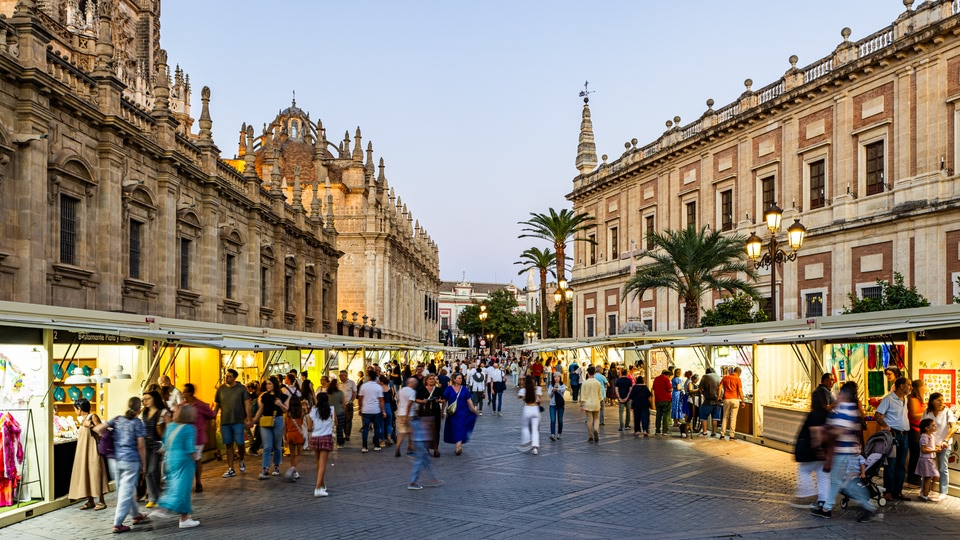
Once the heart of the city’s medieval core, Santa Cruz is where to stay in Seville for all the tourist highlights. Here, you'll find cobbled alleys dotted with souvenir shops, whitewashed buildings and hidden plazas adorned with orange trees. Duck into a tapas bar for octopus and Iberian ham and explore landmarks such as the majestic Seville Cathedral and the Alcazar of Seville.
Good for: Shopping, tapas, architecture

Alameda de Hercules
Alameda de Hercules is the best neighbourhood to stay in Seville for boho vibes and arty spaces. Originally laid out in the 16th century, this lively district has undergone a renaissance in recent years, attracting a creative community of artists, musicians and designers. Explore the tree-lined promenade of Alameda de Hercules for trendy cafes, boutiques and street art installations.
Good for: Street art, food, music
Triana
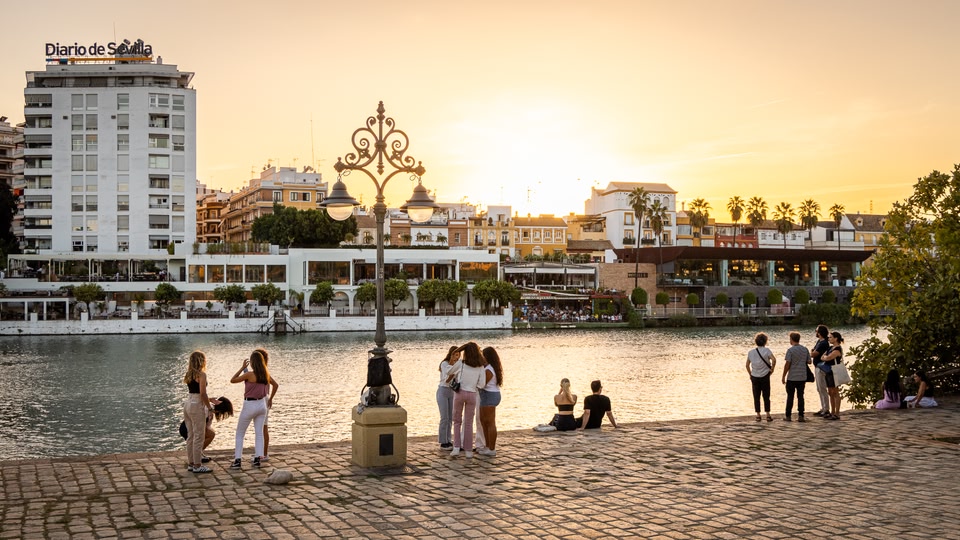
Cross the Puente de Isabel II bridge to discover the vibrant neighbourhood of Triana, a hub of Andalusian culture. Explore the narrow cobbled streets lined by traditional ceramic workshops and taverns serving stewed pork cheek. Stroll along the riverfront promenade for dreamy views of the Guadalquivir River and the Torre del Oro landmark tower.
Good for: Culture, food, walking
Things to do in Seville
Family friendly things to do
Parks, museums and wildlife offer interesting things to do with family in Seville. Dive into wave pools, ride slides and relax on a natural sand beach at Isla Magica park. Spot turtles at the Seville Aquarium and visit the Bioparc, where exotic animals roam in natural habitats. Green spaces like Parque de Maria Luisa are also ideal for picnics and playtime.
Shopping
Shopping in Seville is a real highlight with its blend of shopping streets, high-end department stores and small boutiques. Calle Sierpes is one of Seville's most well-known shopping areas, packed with fashion stores and souvenir shops. Calle Tetuan is where you'll find cafes and Spanish chain stores Oysho, Stradivarius and Bershka. For ceramics and fresh produce, head to Mercado de Triana.
Take in the culture
If you love culture, enjoy the many galleries and museums in Seville. Visit the Museum of Fine Arts of Seville, home to a vast collection of works by renowned Spanish artists such as Velasquez, Murillo and Zurbaran. The Flamenco Dance Museum offers immersive exhibits and live performances showcasing Spanish dance. Stop by the Archaeological Museum to see artefacts from prehistoric times to the Roman era.
Nightlife
The nightlife in Seville has an electric mix of entertainment and traditional music. Tapas bars and flamenco ‘tablaos’ line the narrow streets of the historic centre. For late-night dancing, head to Plaza de la Alameda with its trendy bars and outdoor terraces. Triana's riverside bars and cafes are where locals gather for tapas and spontaneous flamenco performances.
Places to eat
Many restaurants in Seville serve traditional tapas and Andalusian specialities like Iberian ham, chickpea stew and crispy fried fish. Head to Bodega Santa Cruz Las Columnas for ‘patatas bravas’ (fried potatoes) and grilled chorizo paired with local sherry. Try the city's signature dish ‘gazpacho’ (chilled tomato soup) and feast on succulent pork cheeks known as ‘carrillada’ at Casa Morales.
Free things to do
There are many free things to do in Seville if you’re on a budget. Stretch your legs along the banks of the Guadalquivir River and admire landmarks like Torre del Oro. For art lovers, Hospital de los Venerables offers free admission to its Spanish Golden Age paintings collection. Time your visit to Plaza de Espana right and you can catch free flamenco performances.
Get ready for Seville
Budget
Andalusia is one of the more affordable regions in one of Europe’s most affordable countries. So it’s fairly easy to enjoy an inexpensive stay in Seville. A hearty tapas meal can be had for around 12 euros (€). And your morning cappuccino or afternoon beer will only set you back about €2. Short taxi rides cost about €5.
Day trips from Seville
The medieval city of Córdoba is an hour away by train. Don’t miss its Roman aqueduct, stunning mosque and photogenic Old Town. Board a train in the other direction to reach Jerez de la Frontera, famous for its sherry bodegas and equestrian shows. Or grab your binoculars and head for Doñana National Park, a wetland refuge for endangered birds.
Getting around Seville
Navigating Seville is a breeze thanks to its efficient public transport system and pedestrian-friendly streets. Buy a tourist card to save money when riding the buses, trams and metro line. Seville’s bike-sharing system is perfect if you want an eco-friendly way to explore. For drivers, hire cars are available at multiple locations, including the airport.


